Cat & Dog Ultrasound in Las Vegas, NV
When something seems off with your pet, you want answers as soon as possible. A cat and dog ultrasound gives us a way to look beneath the surface quickly, safely, and without discomfort, so we can better understand what your pet is experiencing.
At Sahara Pines Animal Hospital, we use advanced ultrasound technology to evaluate your pet’s internal health in real time, allowing us to decipher issues in the chest or abdomen that physical exams and X-rays alone cannot.
If your dog or cat needs advanced diagnostic imaging, contact us for an appointment.
How Does a Pet Ultrasound Work?
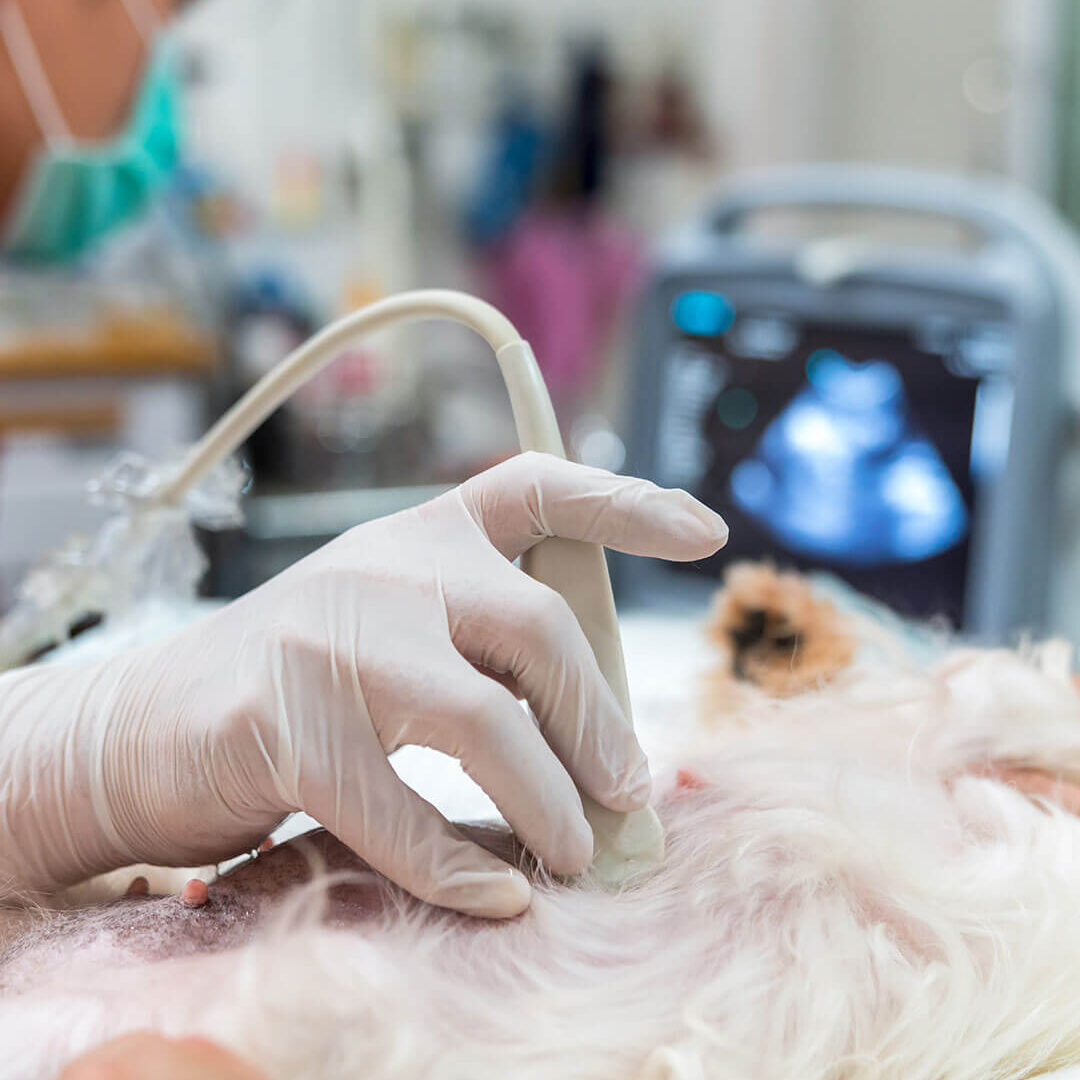
Ultrasound is a non-invasive imaging tool that uses sound waves to create live images of your pet’s internal organs. Unlike X-rays, it does not use radiation.
A small handheld probe sends high-frequency sound waves into the body. These waves bounce off tissues and organs, and the returning echoes are translated into detailed images on a screen.
This allows our veterinarians to observe movement and function in real time, including blood flow, organ structure, and even heart activity. Ultrasound is especially useful for examining soft tissues like the liver, kidneys, bladder, and heart, which are areas that other imaging methods may not show as clearly.
Why Might Your Pet Need an Ultrasound?
An ultrasound is often recommended when a physical exam or lab work suggests something deeper needs evaluation. It helps us move from “something isn’t right” to understanding why.
Your veterinarian may suggest an ultrasound if your pet is experiencing:
- Ongoing vomiting or diarrhea
- Unexplained weight loss
- Changes in appetite
- Abdominal swelling or discomfort
- Abnormal bloodwork results
- Difficulty urinating or suspected bladder issues
- Signs of heart disease
Ultrasound can also be used to monitor ongoing conditions or guide procedures like biopsies with greater precision.
What Can an Ultrasound Detect?
Because ultrasound provides detailed images of soft tissues, it plays an important role in diagnosing a wide range of conditions.
With ultrasound, we can evaluate:
- Liver, kidneys, spleen, and gallbladder
- Bladder and urinary tract
- Gastrointestinal tract
- Heart structure and function
- Pregnancy and fetal development
It can help identify:
- Tumors or abnormal growths
- Cysts or fluid buildup
- Organ enlargement or structural changes
- Bladder stones
- Heart conditions
Ultrasound is also valuable for catching subtle changes early, which can make a meaningful difference in how quickly treatment begins.